
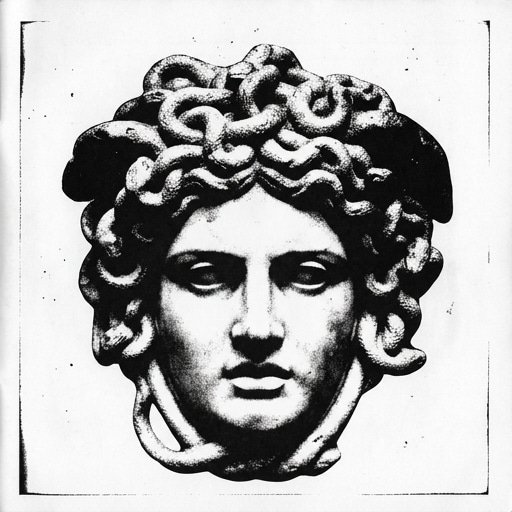
Shadow Work, Projection Psychology and the Villain of the Week
Shadow work means meeting the anger, fear and grief you've disowned. Online outrage is what happens when a crowd projects all of it onto one villain.

Against Ascension: On Yin, Villain Era, and What That Rises From Below
Ascension theology isn't only a claim about directionality. Ultimately, it’s a claim about rank. Up got built, as something superior to down, roughly the same centuries and the same contact through which white got built into a colour standing for purity, and dark into a colour standing for threat, or sin, or a savagery whiteness got to define.
The missionaries who told the ones who came before me that their ancestor altar amounted to darkness needing illumination was reaching to file and rank souls, and that a colonial administration used to sort populations. Light meant civilized, correct, saved, clean. Dark meant backward, contaminated, wrong, damned. That sorting began with gender, and then through the belief that one’s belief is more up than another, that same sorting continued with race. Notice the load-bearing vocabulary in spiritual language that likes to describe itself, these days, as post-religious. Notice the sorting.
Contemporary spirituality tends to believe it left that assumption behind when it left the church. I don't think it did. I think it rebuilt the identical hierarchy just inside the exit, and called it vibration now, or frequency, a level a person is meant to be operating at, a number consciousness is meant to clear before anyone will grant that it's legitimate. New Age spirituality rewards rightness and politeness, guards comfort, and simultaneously avoids discomfort, particularly the harmed’s discomfort at all costs. Again, notice the sorting.

10 Signs a Deceased Loved One Is Nearby (and What They Can't Tell You)
How Do You Know a Sign Is Real and Not Coincidence?
I've never found a way to prove a sign with certainty, and I don't entirely trust anyone who claims they have. What they're usually selling is reassurance, and it can be exploited to trick someone in deep grief. What I can offer instead are three checks I return to every time, as a set of principles, as a way to discern and gauge.
Specificity. Does it reach for something only the two of you would recognize? This could be a private joke, a date that means nothing to anyone else, a phrase used exactly the way they used it? A robin in the yard is just a robin. A hummingbird tapping at a window in the dead of winter, in a place no hummingbird has any business still being, could very well signal a spirit embodying the bird as an avatar.
Timing. Does it arrive at an anniversary, a birthday, the morning of a decision, the exact second you have a doubtful thought?
Tenacity. Does it repeat across a series, often in threes? A psychic scent, a song that is typically not heard on the radio, small objects appearing in unusual places? A mind that wants a pattern will usually find one, but it tends to find it in a single occurrence. A series of the unusual is a pattern, and is harder to make up or dismiss.

Are Mediums Real? A Working Psychic Medium on How to Tell
So are mediums for real or fake?
Coming from someone who professionally offers spirit mediumship readings (psychic readings), I realize that my line of work is naturally under more scrutiny, as it should be. That said, there are quality professionals in every sector, and unfortunately, also ones who aren’t. So if you’re in need of deep spiritual and psychic work and support, here are some suggestions on what to look for.
Tips for spotting a legit psychic versus a fake medium
Clarity: Look for someone who, even on their website or marketing materials, communicates clearly and doesn’t over-rely on buzzwords or trend-based spiritual vocabulary that’s vague or requires interpretation on your part. A trustworthy psychic and spiritual educator will use occult terminology with specificity and context, and will also be able to translate concepts into everyday, accessible language. I do my best to share a term and then define it so the querent is clear.
Specificity: If a psychic medium only speaks in general or vague terms with unverifiable information, those are red flags. I offer spiritual guidance that is specific to a person, situation, or social/familial dynamic, and can often provide time frames as well.
Impractical or unrealistic advice: It’s important that the psychic stays on topic and doesn’t distract the querent with unhelpful or intangible advice. They should attune to the heart of the matter, cut through distraction, and provide actionable or otherwise practical guidance.
明白: What Clarity Means in the I Ching
What does 明白 mean in Mandarin?
明白 (míngbai) is the word for clarity in spoken Mandarin, and it doesn't mean bright the way a single character may suggest to an anglophone. It means to understand, to see a thing plainly, the moment insight comes to an otherwise occluded mind. 明 (míng) on its own describes light, sun and moon set side by side, the notion of solar and lunar illumination. 明白 takes that light and turns it into comprehension, adds 白 (bái), plain, clear, laid bare, and the two together describe light landing being received. The reception of light denotes relationality, clarity comes through an animated interplay between two or more parties.
This is the word I grew up hearing and speaking.
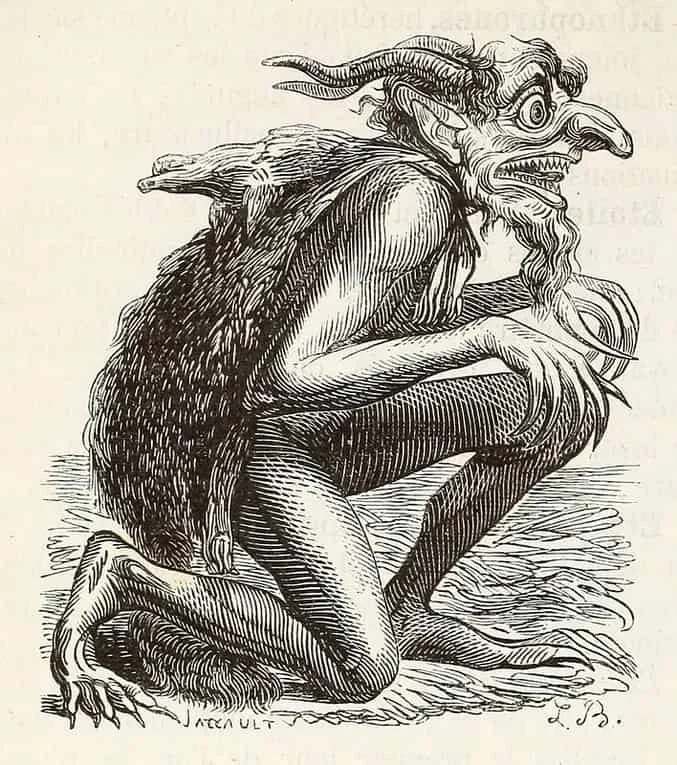
What Is Spiritual Bankruptcy? And How Does It Differs from Spiritual Bypassing?
Spiritual bypassing, a term introduced by psychologist John Welwood in 1984, describes the tendency to use spiritual ideas and practices to sidestep unresolved emotional wounds, personal accountability, and the demands of being in relationships.
Spiritual bankruptcy is what happens when bypassing becomes the perspective of an entire self-concept, a system so complete it no longer needs to avoid the work because it has learned to perform the work instead, to the degree that it often does not recognize it in itself.
Spiritual practice in any serious tradition makes the demand that we become more truthful as a fruit of committed practice. The sacred is meant to implicate us, arouse accountability in our perspectives, behaviour and relationships, and dissolve the performed self rather than decorate it with more trophies.

Being Seen Isn't the Same as Being Known
Severance is a loss of felt obligation to something outside the individual self, re-animation understands spirit as relational rather than personal, and treats community as the intersection where accountability, and by extension repair and healing, gets to happen. Mimi Young discusses how the loss of animacy relates to the loss of intuition, and what to do to regain relationship.
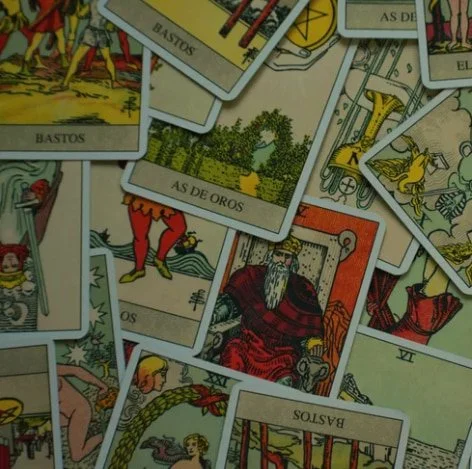
Tarot’s Main Character Problem
Archetypes require a protagonist. Stories need a main character. Tarot, Western astrology, and other symbol-based divination systems are about identifying yourself at the centre of an image and read outward from there. And while this can produces insight, it also produces a ceiling, where the reading reflects your psychology back at you with permission and even indulgence.

DOES THE I CHING MENTION TEA?
The I Ching (The Book of Changes), the oldest Chinese oracle, divination text and philosophical system is said to be birthed and used from ~1150 BCE, around the same time Tea was discovered as a plant medicine. The I Ching uses a system of hexagrams, or six-line figures, to represent and directly speak to different patterns of change within the Seen and Unseen Worlds.

Common Questions and Answers about the I Ching
How is the I Ching different from Tarot, astrology, or other oracles?
The I Ching is not primarily symbolic or intuitive. It is a structural oracle that maps how change actually unfolds. Rather than centering personal story or archetype, it describes the configuration of a situation and what that configuration tends to produce if it continues. This can be disorienting at first, because it pulls us out of the narrator’s seat and into a logic closer to mathematics and natural law. Like patterns found in weather, crystals, or cells, the I Ching works through binary relationships and line structures that exist independent of an over-emphasis of needing spirituality to make us “feel good”. Instead, it helps us understand.
Is it appropriate to study the I Ching as a non-Chinese person?
You do not need to be of Chinese ancestry to participate in the I Ching series. The I Ching is a classical text and living system that has traveled across cultures because it speaks to universal patterns of change and decision-making. What matters is how it is studied and from whom. As someone of Chinese heritage, I am explicitly inviting you into this work. This series is taught within a culturally grounded, lineage-aware framework that honours the I Ching’s origins rather than abstracting or diluting them. Participation is not about ancestry, but about respect, responsibility, and relational learning. This series welcomes those who engage with care, rigour, and integrity.

A Quick I Ching Reading on Hexagram 24
The I Ching (Yi Jing) is the shamanic oracle of Chinese antiquity, also called the Book of Change. A collection of 64 change archetypes, manipulations and play arrangements in schematic form, it's one of the oldest surviving forms of divination. I say divination rather than fortune-telling, as the latter tends to suggest deities or other powers that control our human fates, whereas, in my experience as an animist medium and conjurer that it's more about change unfolding according to each situation's principles, and that all things in the process of change are connected. This allows us to determine our exact position in the unfolding process, understand who or what it will impact, and proceed with confidence in our predictions. The I Ching emphasizes probability, analyzing conditions, and envisioning actions to shape desired outcomes or avert dangers. In this way, divining becomes a form of innovation, blending creativity with technical analysis.

Common and Unusual Reasons People Book A Psychic Reading
The reasons people find their way to a Shamanic Mediumship Reading with me are more varied than one may expect at first glance. If you have an occult practice, there are reasons here specific to you, too.
Cross roads and Decision-Making
You are at a turning point and need clarity on direction. Career, relationship, location, a life change that feels too vast to navigate with the information you currently have.
Ancestral and Spirit Contact
You want direct communication with beloved deceased humans and animals, ancestors, or other spirit beings. Grief may be part of it, but the desire is for continued relationship on different terms, to maintain or reopen the conversation.
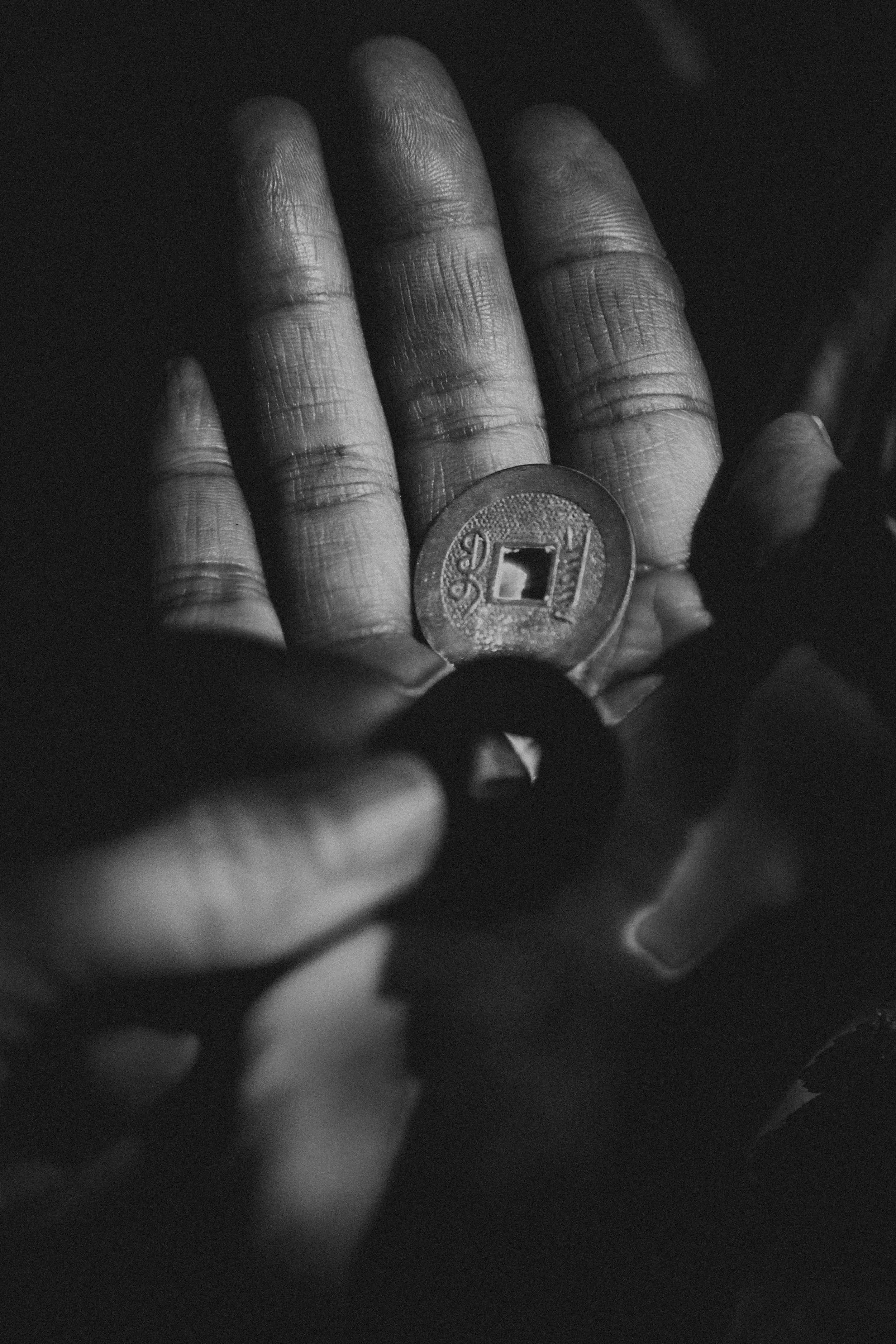
The I Ching Is a Map, Of Every Position That Already (and Could) Ever Exist
What this means for the hexagrams
Every hexagram is a corner of that shape. I don’t mean this metaphorically. Yes the hexagrams are presented as symbols, but in reality, they not only take up space, they are space. A specific and unique position on a hypercubed map.
Each corner has exactly six neighbours. Those six neighbours are the six hexagrams you can reach by changing one line. One line changes and you have moved along a single edge to the immediately adjacent position. Two lines change and you are two edges away. Six lines change and you have crossed the entire diameter of the space, from one corner to the corner furthest from it.
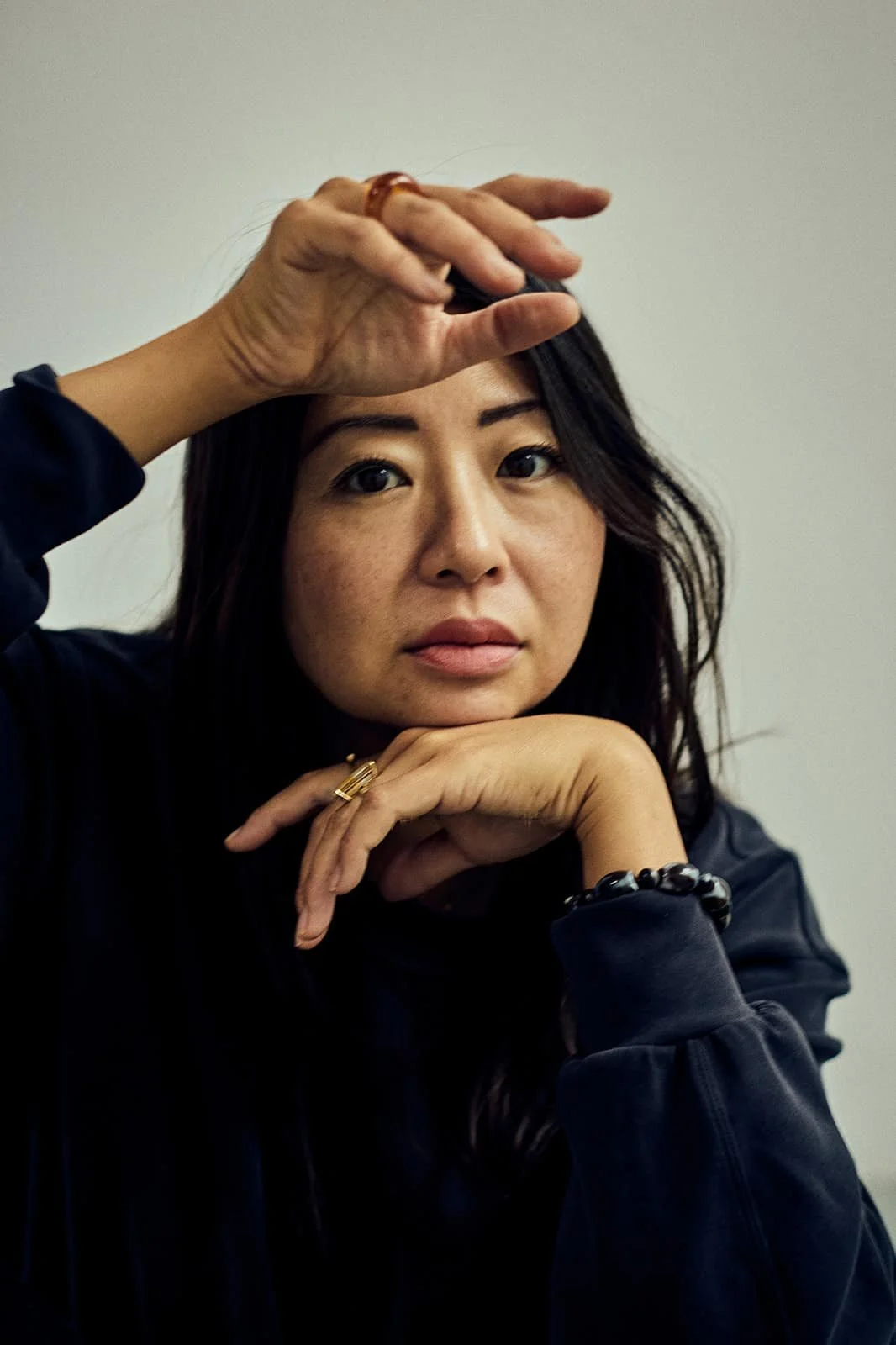
The Oracle Agrees With You. That’s the Problem.
A Tarot spread, a hexagram, a ceromancy reading should not be search engines returning results that match your query. When functioning correctly, they are indifferent to your query. That indifference is vitally important. Remove it, and what remains is an elaborate mirror that we false claim that our guides “told us”.
What has eroded is something that is more fundamental than being open-minded, to have the ability to sit with what does not resemble you and your views. Collective accountability depends on that capacity. So does clear perception. When we lack that ability to be able to sit with non-sameness or discomfort, we have lost the condition that makes reception possible.

Famished: I am perimenopausal, and I am done being legible
I am hungry, famished, even. At first I thought it was long Covid, and maybe it was, but then it blurred into something else, and though I was exhausted, it was more than that, and though I was grieving, it also wasn't only that, either. I was starving for a reprieve while the seams of my clothing were also bulging of irritability, the despair, the murderous impatience, the heat rising, the isolating shame, the madness, and also the clarity, oh the clarity!
My body has been strange to me, each day traversing a portion of an unmapped wilderness. The sleep that no longer reconstitutes me the way it used to. An emotional intensity and perceptual sharpness that my usual restraint keeps lidded. I am spiky in some places and softening in others. I am a practitioner of Chinese metaphysics. I read bodies and life trajectories through BaZi, the I Ching, the slower language of Daoist cosmology. I know how to sit with complexity without demanding resolution. And still, this transition has surprised me, its fed-up, pent-up, let's-fuck-it-up rage has made me question more times than I care to admit in writing, whether I am becoming the trope of the angry woman in midlife. Good lord, is this the archetype I am now becoming?
What surprised me more was how little I was offered, in the way of language, or willing company, for what was happening.
Perimenopause is not a symptom list or a meme. While it's true that sleep disruption, hot flashes, rotator cuff issues, bloating after salad have been my reality, the physical instability is mirroring something that goes considerably deeper, and that deeper territory is where I live. For me, early perimenopause arrived as a medical event and an identity crisis simultaneously, and the grief of it, and grief are not two separate conversations, it turns out, was as disorienting as anything physical. It is a terrain of questioning, reassessment, unsubscription, and negotiation in all aspects of my personhood and relations, and the terms seem to change often and with no warning. And underneath all of it, a kind of yearning I would not call nostalgia, because it points forward.

What is a Subtractive Spell?
For many of us, we begin our journey in magic practice by engaging in attractant spells. Much like learning math, we learn addition before we learn subtraction.
Subtractive magic works by removing or reducing. While it can be about an unwanted pattern, an unwanted person’s influence or presence, a harmful policy, or something else that has grown beyond its life-giving proportion, the fundamental quality of this style of spell is about removing it one degree at a time, working with allies that are suited to the task.

Why Isn’t My Spell Working?
A spell or magical working has two layers of communication. One is the petition itself, that is, what you are asking for. The other is the form the spell takes, and that shape or modelling tells the receiving spirit(s) and energies involved what kind of relationship you are proposing or have committed to.
In witchcraft rituals and spell work, this alignment between form and petition is one of the most overlooked reasons a working succeeds or falls short.

The Difference Between Ritual and Routine
Earlier this spring, I sat down with Allison Audrey Weldon of Sangre de Fruta for a conversation about ritual, plant intelligence, and what it means to work with botanicals as beings rather than ingredients. We touched on the difference between routine and ritual, how scent moves through the body before the thinking mind can intercept it, and what I'm actually listening for when I pour tea for someone.
The full interview is published on the Sangre de Fruta journal.

What I Ching Divination Taught Me About Parenting Teens
Rachel Cusk wrote something I have returned to many times, about how children teach us to love and in doing so reveal, slowly, the full extent of what we ourselves were never given. I think about this often with Luca, and more so this spring, when the shape of our relationship is visibly changing and I am finding that what is being asked of me now requires something I was not taught either.
I’ve been sitting with the I Ching more than usual this spring, as I tend to do when I’m in a period that doesn’t have language yet. What keeps coming up is Hexagram 53, gradual progress, the image of geese crossing water, each one taking its place in sequence, as biology has directed them to do. The commentary says the student must come to the teacher, not the other way around. If we were to push the West’s hierarchical interpretation of student and teacher, I think about how much of my parenting has been the inverse of the hexagram, showing up unrequested with the thing I thought he needed, certain I knew what it was, and being met with the withering look that teenagers reserve for exactly this kind of blunder.
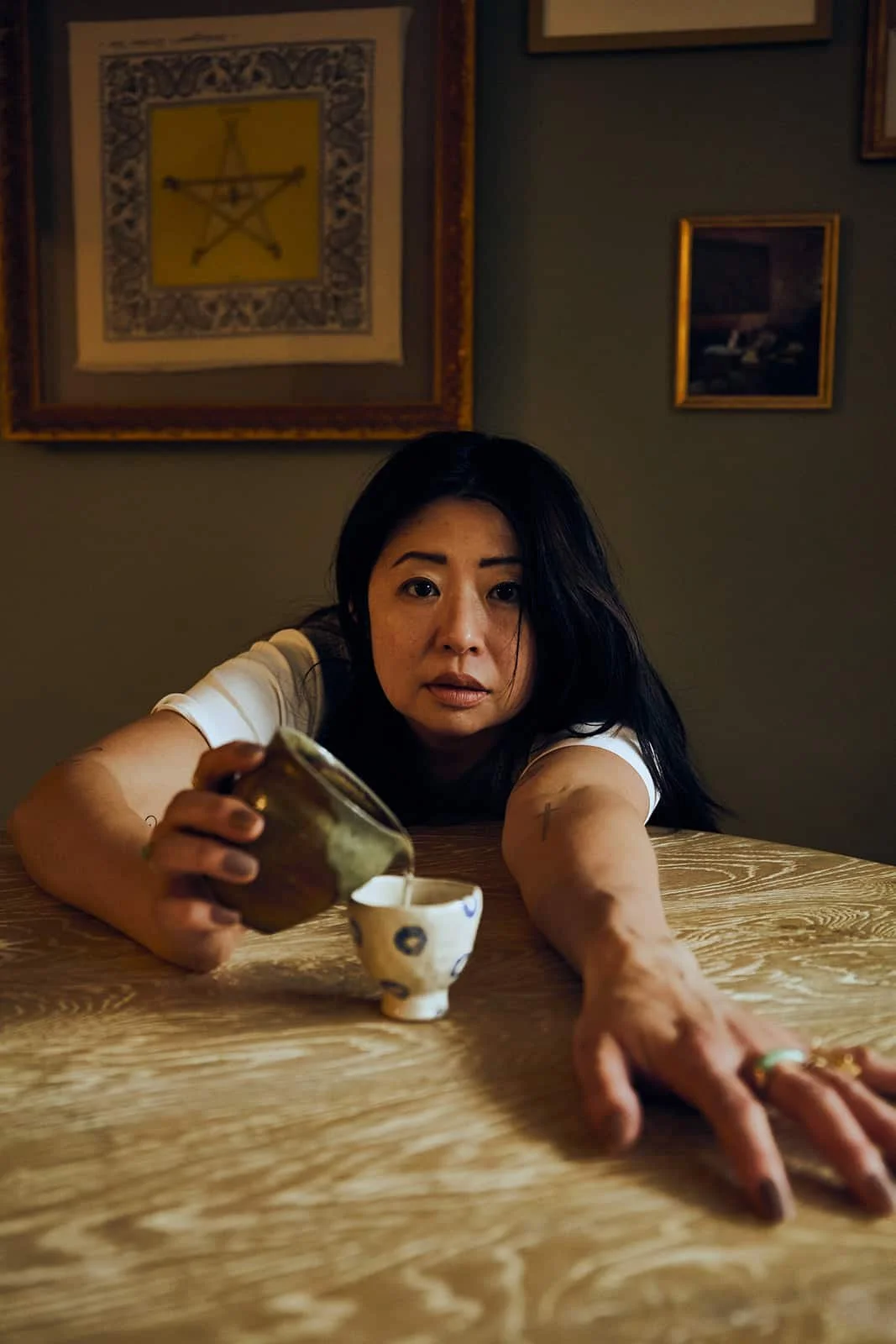
On the Meaning of Ritual
What is the definition of ritual? Ritual, at its core, is a set of actions performed in a specific sequence, within a defined container, that carries symbolic or sacred significance beyond the actions themselves. To define ritual accurately is to distinguish it from habit or routine, and that distinction lives in the orientation of the person performing it. Ritual is consciously directed toward something outside the ordinary, whether that is a deity, a spirit, a natural force, or a state of heightened attention. The ritual meaning of any practice is not located in the action itself but in the coherence of the container it is held within, and the awareness brought to the threshold each time it is crossed.