
Part 2: Yin Magic: How Rituals, Divination, and Protection Change During Exhaustion or the Winter Season
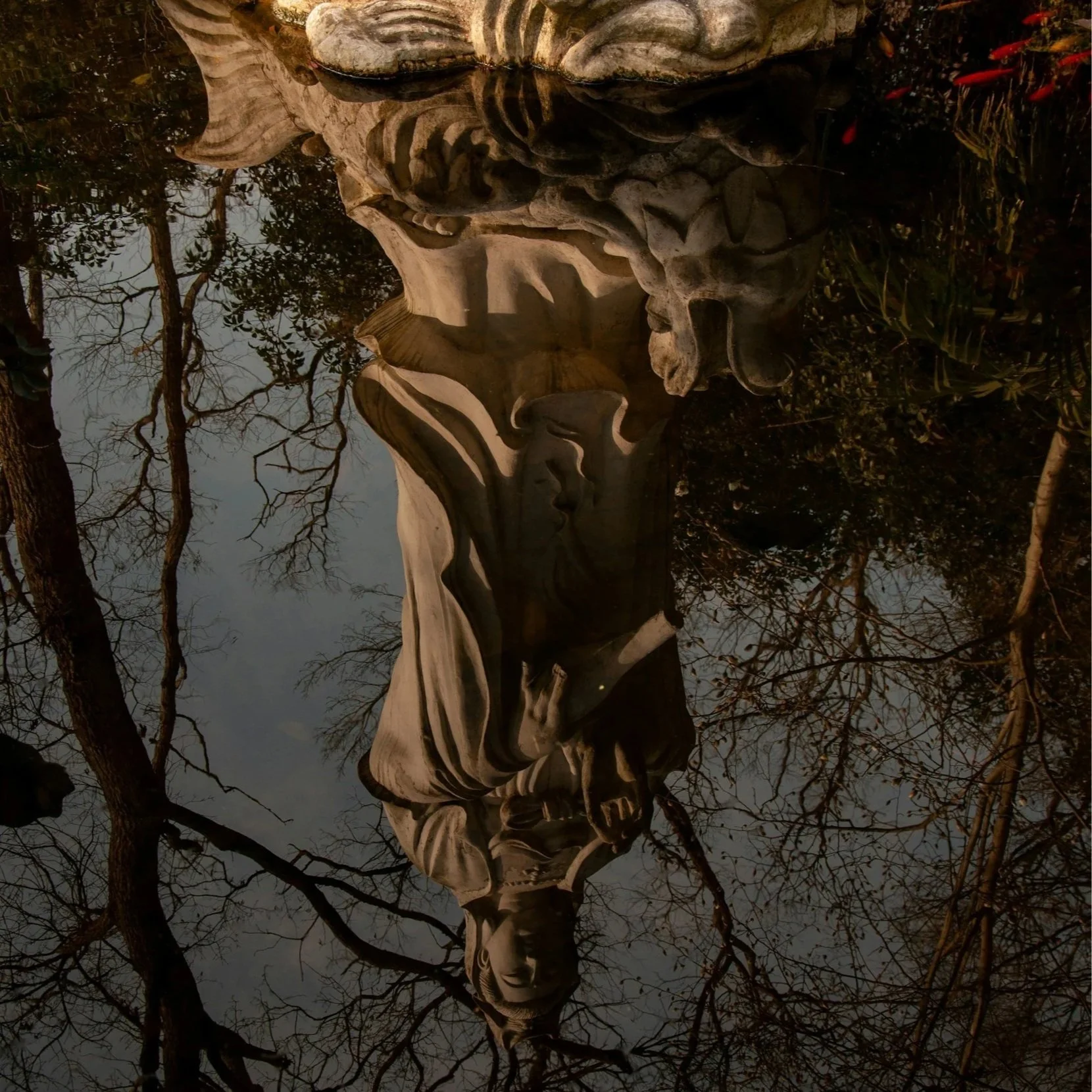
How does magic change with Yin energies?
Continuing on from my blog post about exhaustion and magic, while there may be some truth to this, working in Yin is not simply just “doing less” or “slowing down.” It is adopting the formats of magic altogether as a different set of spirits are involved, along with their mechanics. Below is an overview of what the magic looks like, what actions belong here, and what forms are no longer viable under Yin governance. (I elaborate MUCH more in Finding I Ching Clarity, a 24 part series on understanding the spirits of Yin and Yang, and how their lines interplay within the hexagrams of the I Ching, the oldest oracle still in use).
1. Magic shifts from “casting” to “conduction.”
The idea that magic begins with projection, intention, and will is largely a Western formulation. It emerges from Renaissance ceremonial magic, Enlightenment-era notions of individual agency, and the belief that the practitioner’s mind is the primary instrument of power.
In a western Yang model:
the practitioner directs
the spirits obey or negotiate
the energies move outward
the ritual space is shaped to match the magician’s intent
It is a worldview shaped by Enochian and Solomonic magic traditions, which privileges command over conversation, Agrippa, who centres the trained will as the axis of influence; and later the New Age and manifestation culture, which equate “intention” with the engine of reality.
Yang magic often assumes that magic is something you do to the world, where one projects outward, asserts, and generates.
But in Yin’s jurisdiction, and in many animist, Daoist, and Indigenous cosmologies, this format is incomplete, sometimes inappropriate, and often ineffective.
In Yin practice:
you don’t impose; you absorb
you don’t command; you cohere
you don’t raise energy; you attune to what’s already in motion
you don’t ask spirits to accelerate; you invite them arrive in their own timing
This is magic as conduction, and it’s a shift from controlling the ritual field to becoming permeable enough to be instructed by it (imagine, humans being instructed for a change!) Where Western magic tends to value directed will, Yin values relational sensitivity. Where Western magic places the practitioner at the centre, Yin places the situation (the ‘land’) at the centre.
Western techniques assume the world is altered through decisive action. Yin techniques assume the world reveals its pattern when you adjust your posture (I elaborate on this in the I Ching course, Finding I Ching Clarity).
So a bowl of water becomes a recorder of the room’s conditions. A candle becomes an informant rather than an instrument. An amulet becomes a witness whose perspective you follow. Spirits become presences you meet on their own terrain, not beings you “summon.”
Yin does not respond to force. It responds to permeability, to one’s ability to recognize the movement that is already happening, and align with it rather than overpower it. I do want to clarify something important, though: Yin magic is not passive magic. It is a different cosmology of agency entirely.
2. Magic moves from “petition” to “attunement.”
Petitions, spells, calls, sigils, intention-setting, these are examples of solar or Yang magic technologies. In Yin’s governance, the technique is not to ask. It is to observe and overhear.
The actions may look like:
noticing which thought repeats without prompting
tracking the behaviour of weather, not amassing a dictionary of symbols
observing where your body feels heavier or lighter in relation to terrain
sitting by a window until something in the landscape acknowledges you
letting the ancestors initiate contact
In other words, the magic is conducted by resonance, not request. Resonance in this sense is about preparation, and to a degree, humility.

3. Rituals collapse into a single gesture.
Yang rituals are sequenced choreographies. Yin rituals are single movements with long shadows.
They may look like:
placing one stone on the floor and leaving it untouched for three days, then doing psychometry with the stone
writing one line in a notebook, slowly holding the vowels
pouring water into soil and not asking it for anything
bowing once to the altar with no follow-up action
4. Divination shifts from “interpretation” to “orientation.”
When you cast in Yin, you’re not looking for an answer. You’re looking for coordinates.
The actions may involve:
casting the I Ching to identify where you are, not what to do
accepting that the hexagram names the landscape, not your task (landscape actually will always dictate the task)
watching which hexagrams repeat over days (the recurrence is the meaning)
letting the lower trigram matter more than the judgment
tracking the “weather” of the reading instead of its advice
This is map-reading, not troubleshooting. It does not perceive Yin is a “problem” that needs to be troubleshooted.
5. Offerings shift from nourishment to disclosure.
Bright-world offerings are energetic exchanges, sometimes even viewed as payment for services rendered. Yin offerings are acts of revealing.
They may look like:
placing something on the altar that exposes your actual state, such as letting your broken heart be the offering
offering your condition as-is, not upgraded or forced
leaving an object out for the spirits
In my experience, Yang spirits relate through speech. Yin spirits speak through presence and so this is how we can communicate with them effectively. In Yin magic, spirits don’t want your Yang improvements, they want your unnegotiated reality.

6. Protection magic shifts from “warding” to “density.”
Yang wards by pushing out. Yin wards by condensing and trapping.
Action formats:
sitting with your back against a wall until the wall feels like it has agreed to hold you
using weight, such as salt, stones, iron, earth, as protection instead of primarily relying on sigils or visual symbols
closing doors, curtains, drawers, cabinets: giving the house fewer open lines, more contained volume
placing all sharp tools in the most vulnerable location so the home has a single, intentional point of edge rather than blades scattered through the field
Witch bottles belong here as a quintessential Yin technology. They do not repel by shining; they draw in, condense, and sequester harm into a single vessel, then neutralize it through mass, nailwork, burial, or heat.
7. The body becomes the altar.
With Yin energy, the body itself is the most immediate (and effective) instrument. The altar is no longer separate from you. You are the site. From a macro perspective, the land is also the site, and what occurs between the micro site of your body in relation to the macro site is not a metaphorical altar, but a very literal one.
If you’re asking what is Yin energy, or wanting to understand Yin energy and as a mode of operating, together, consider my 8-Part Class Series of Creative Writing, Rites, and Media Study called WRONG: Yin Rites as Heretic, Villain & Perverse.
Following the spirits,
Mimi
Spirit medium and occultist