
Field Notes on the Meaning of Yin
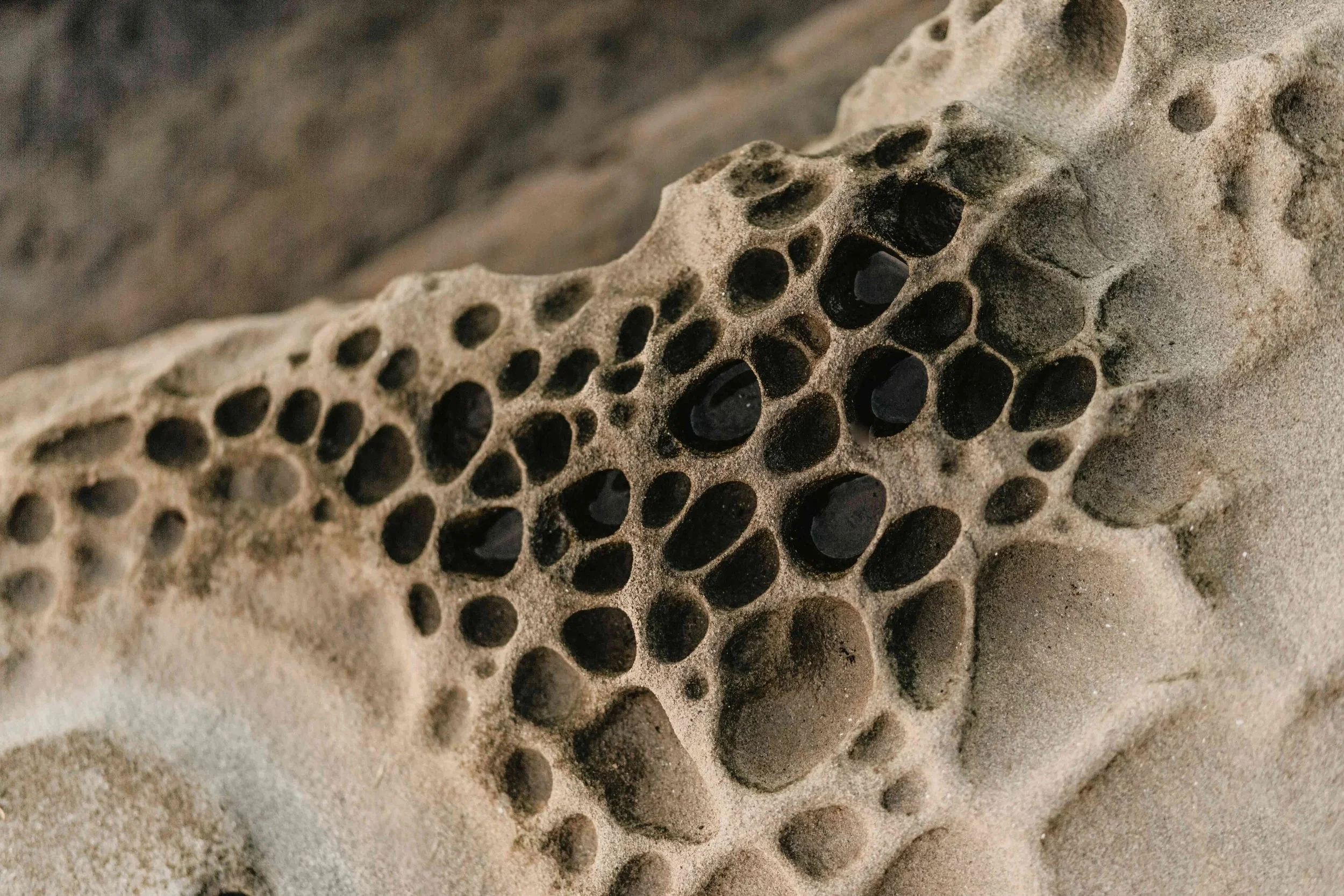
The deeper yin meaning goes beyond rest. Yin is a way of moving with shadow and the unseen forces.
This first, introductory piece sets the stage for better understanding and relating with the Yin principle in Daoist theory and practice. It will help you see that Yin is not simply rest or collapse, but a distinct way that magic, spirit, and matter move. It also opens a three-part blog series:
Across the series, I explore how depletion, exhaustion, and winter alter our relationship to spirit work and map the actual behaviours of Yin in the world. Below are my field notes gathered from mediumship, ritual practice, working with the I Ching, and the lived mechanics of Yin governance: how she moves, how she influences, and what she requires. Rather than a definition, what follows is the sensorial, relational, and often hidden architecture of Yin magic.
As I’ve shared on Instagram, while experiencing Yin lines within the I Ching, I’ve been shown that Yin is not a single, unified force but an infinitely complex field of shadows, which can include subtle inflections of rest, stillness, concealment, and interiourity that operate across bodies, objects, sensations, images, and states of mind. Yin alters whatever it touches through modulation, often times undramatically: the dimming of brightness, the slowing of pulse, the thickening of atmosphere.
Yin gives rise to altered identities, altar egos, the oracle, the dreamer, the destroyer, the rival, the empowered submissive. As a methodology of subtle transformations, Yin operates through coolness, slowness, silence, shadow, and the generative dark. She holds both the creative potential of the seed and the dissolving pull of decay. In this way, Yin is neither passive nor inert, but a creative-destructive force that reveals what has been overlooked and invites what is latent to take form.
Yin is subversive. She does not accept truths as final possibilities. Death always has the final word, and Death is just one expression of Yin, as necromancy is yet another Yin aspect, among many others.
My in-progress list of the meaning of Yin:
Yin is bound to thresholds; she gathers in the interval before an event and in the quiet after it, holding both anticipation and residue.
Yin operates through soft contact and close-range influence in tone, pace, silence, shared breath.
Yin concentrates during slackness and delay, storing what the conscious mind calls wasted time.
Yin can elevate a minor sensation above the whole scene, letting an indefinable scent or a peripheral glance reorganize the field of experience.
Yin engages in narrative distortion by thickening context, adding side paths, and dissolving clear edges, using ambiguity as instrument.
Yin forms enclosures that appear sealed yet function as apertures: the room with the curtain drawn, the booby trap, the hole in the fence, the well.
Yin draws bodies into trembling, yielding, and softening, interrupting rigid postures of control.
Yin can suspend certain movements of fate, slowing cycles that are overheated and inviting reversal or delay.
Yin has the sensorial field of dusk, with muted colour, blended outlines, altered depth perception.
Yin strikes by returning things to origin: to root, blood, bone, and soil. She re-ancestralizes.
Yin sustains a descending paradigm of world, from surface to underlayer, from public to secret, from spoken to imagined.
Yin subjects identity to ambiguity, cloaking fixed roles in half-light so that other figures can emerge.
Yin has her own conception of glory: compost, rot, and the completed cycle that leaves no spectacle, a state of post-visibility.
Yin moves through spirals of return, revisiting a scene or pattern at a deeper turn in the coil.
What is Yin? Here are more examples of Yin meaning:
Yin fuses the living with the dead through necromantic contact, phantom or ancestral presence, and the recurrent image.
Yin conceives hiddenness as an active principle, keeping the sacred close to the ground and often inside the body. She does not need naming.
Yin cloaks herself through side-angles and indirect routes, favouring detour, echo, and reflection.
Yin uses strange orienting mechanisms: the pull of water, the incline of a shadow, the weight of the air in a room.
Yin can enter other beings through resonance, possession, or shared sensation, altering them from within.
Yin turns elemental substances into carriers of force, aligning water, fog, smoke, blood, and salt with specific intentions.
Yin can disassemble and redistribute herself, moving from organ to organ, from dream to waking, from person to place.
Yin develops features of animality: the cat, the owl, the bat, the snake, each a diagram of how to see, hear, or move in the dark.
Yin often hides conquest inside apparent surrender, allowing collapse, yielding, or silence to reroute power. She is the Victorious Submissive.
Yin is a devouring-apparatus of compost, taking in what is spent and converting it into future fertility.
Yin has her own designated zones: wells, caves, basements, graveyards, winter forests, and the internal organs at night.
Yin keeps vigil when others drop guard, working in the hours when official time sleeps as night watch.
Yin manipulates appearances through veil, fog, reflection, and disguise, protecting what is in process.
Yin has her own modality of judgment: she dissolves what has hardened beyond use, shelters what is still forming, and waits for the precise temporal opening before allowing emergence.
Study the Daoist Yin principle with me through:
Finding I Ching Clarity, an in-depth I Ching course series
Wrong: Yin Rites as Heretic, Villain & Perverse,
An 8-Part Class Series of Creative Writing, Rites, and Media Study