
Being Seen Isn't the Same as Being Known
Severance is a loss of felt obligation to something outside the individual self, re-animation understands spirit as relational rather than personal, and treats community as the intersection where accountability, and by extension repair and healing, gets to happen. Mimi Young discusses how the loss of animacy relates to the loss of intuition, and what to do to regain relationship.
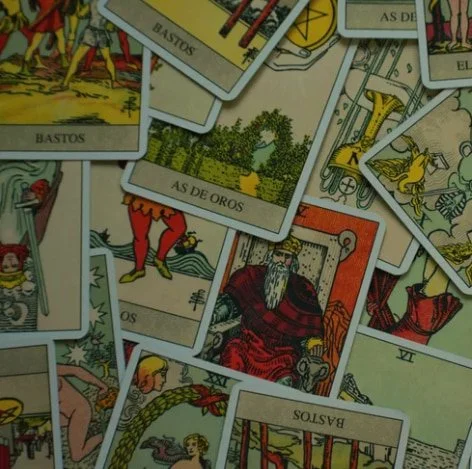
Tarot’s Main Character Problem
Archetypes require a protagonist. Stories need a main character. Tarot, Western astrology, and other symbol-based divination systems are about identifying yourself at the centre of an image and read outward from there. And while this can produces insight, it also produces a ceiling, where the reading reflects your psychology back at you with permission and even indulgence.

DOES THE I CHING MENTION TEA?
The I Ching (The Book of Changes), the oldest Chinese oracle, divination text and philosophical system is said to be birthed and used from ~1150 BCE, around the same time Tea was discovered as a plant medicine. The I Ching uses a system of hexagrams, or six-line figures, to represent and directly speak to different patterns of change within the Seen and Unseen Worlds.

A Quick I Ching Reading on Hexagram 24
The I Ching (Yi Jing) is the shamanic oracle of Chinese antiquity, also called the Book of Change. A collection of 64 change archetypes, manipulations and play arrangements in schematic form, it's one of the oldest surviving forms of divination. I say divination rather than fortune-telling, as the latter tends to suggest deities or other powers that control our human fates, whereas, in my experience as an animist medium and conjurer that it's more about change unfolding according to each situation's principles, and that all things in the process of change are connected. This allows us to determine our exact position in the unfolding process, understand who or what it will impact, and proceed with confidence in our predictions. The I Ching emphasizes probability, analyzing conditions, and envisioning actions to shape desired outcomes or avert dangers. In this way, divining becomes a form of innovation, blending creativity with technical analysis.
The I Ching Is a Map, Of Every Position That Already (and Could) Ever Exist
What this means for the hexagrams
Every hexagram is a corner of that shape. I don’t mean this metaphorically. Yes the hexagrams are presented as symbols, but in reality, they not only take up space, they are space. A specific and unique position on a hypercubed map.
Each corner has exactly six neighbours. Those six neighbours are the six hexagrams you can reach by changing one line. One line changes and you have moved along a single edge to the immediately adjacent position. Two lines change and you are two edges away. Six lines change and you have crossed the entire diameter of the space, from one corner to the corner furthest from it.