
Shadow Work, Projection Psychology and the Villain of the Week
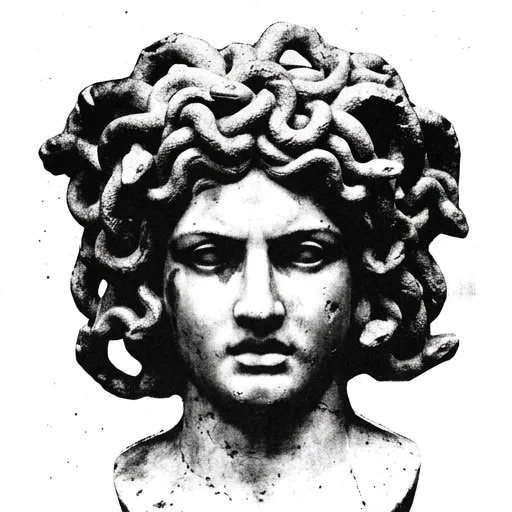
Online outrage & the villain of the week
By Mimi Young · October 2026
Content note: this post discusses sexual assault and police violence.
What is shadow work?
Shadow work is the practice of re-membering the parts of yourself you've disowned, the anger, envy, grief, desire and cruelty you were taught or socialized to dismember or exile. Carl Jung called this the shadow. Left unmet, it surfaces anyway, usually in the faces of other people.
For Jung, projection was the shadow's usual way out. In Aion (1951) he wrote that projections gradually turn the world into a replica of a person's own unknown face, so that we keep meeting ourselves in the people we condemn.
Shadow is cast in relationship, between a light source and an object, so a society has one too, shaped by its values and norms and by everything its members have agreed to look away from, and when we refuse to look at ourselves or at that collective darkness, social media gives us a front-row seat each week as the shadow finds a villain.
What is projection in psychology?
Projection is a defence mechanism in which a person attributes their own unwanted feelings, impulses or traits to someone else. Sigmund Freud first coined this term, and Anna Freud catalogued it with other defences in The Ego and the Mechanisms of Defence (1936). Its close cousin, displacement, takes a feeling from where it started and aims it at someone safer (the dude on the road, the stranger in the comments), usually because the real source is circumstantially not possible.
The everyday examples are familiar. A partner who keeps accusing you of being controlling may have unresolved issues with their domineering mother. Someone furious with their father kicks the wall. Online, the two mechanisms braid together. Someone who has the lived experience of a lifetime of men talking over them, a hand on the small of the back at an office party, a doctor who dismissed their pain, opens Instagram and finds the week's villain arranged in a grid of photos, and the fury goes there because it has to go somewhere, and a public villain is the safest place to direct it. It is unrisky to condemn someone the internet already is hating on, because as far as I know, people don’t get canceled for agreeing.
Naomi Klein traces a political version of this in Doppelganger. She follows how the far right took real grievances, the price of housing and the failures of health care, and steered that anger toward minorities, and she argues that conspiracy theorists often get the facts wrong but the feelings right. Klein calls the resulting place the Mirror World. She was writing about the right, but she also asks questions about how the left likes to say it cares about justice, but often behaves differently.
Why does online outrage need a new villain every week?
Online outrage needs a new villain every week because the relief of condemning someone fades within days, while the anger and grief underneath, the personal shadow is untouched. The crowd feels finished once its target falls, but the conditions that produced the harm carry on, and the feed supplies a fresh face to absorb the next round.
Two weeks ago at the time of this post publishing, it was Ed Sheeran. In September he removed Macklemore from the US leg of his Loop Tour after the rapper said "free Palestine" onstage, following pressure from venue owners including Robert Kraft. Sheeran's first statement defended his long-standing practice of keeping politics out of his shows. Within days nearly half a million people had reportedly unfollowed him, his remaining opening acts and his backing band dropped out, and he opened his Philadelphia show with an apology. Neutrality from a man with that much reach is a choice, and he should answer for it. I do wonder though how many of those half a million unfollows came with a donation to Palestinian aid, a letter to an elected official, or anything beyond the tap of a thumb.
In June 2020, after a Minneapolis police officer murdered George Floyd, millions of Instagram users posted a black square for Blackout Tuesday, and organizers complained that the squares buried the hashtag protesters were using to share information. The George Floyd Justice in Policing Act passed the House in 2021 and died in the Senate, and in 2025 the Justice Department dropped its consent decree cases against the Minneapolis and Louisville police departments. The virtuous squares were on our feeds for 1 day, and the structures they protested outlasted them.
At the time that I wrote and published this, this week the feed belongs to an alleged gang rape at a university fraternity where, according to the survivor's lawsuit, some of the accused were allowed to mitigate their revolting actions by writing essays, a claim the university disputes. Let me be plain about where I stand. If you rape someone, if you take part in a gang rape, there should be consequences that match the crime, and an essay is an insult to her. Bad actors are bad.
My critique is aimed at the crowd, its speed and vitriol and sameness, the hundreds of thousands of content creators who became experts overnight and joined in a digital public stoning, and at how little of that rage reaches the institutions with the power to act.
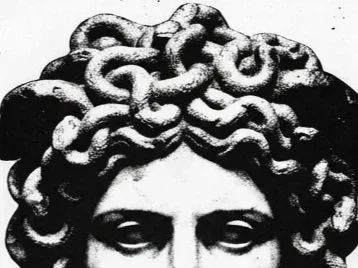
What was the pharmakos?
The pharmakos was a person the ancient Greeks drove out of a city during plague or famine so that everyone inside the community could feel clean again. The word shares its root with pharmakon, meaning both medicine and poison. René Girard argued that communities discharge their accumulated violence onto a single victim and experience the discharge as healing.
The English word scapegoat comes from the book of Leviticus in the Bible, where a goat was sent into the wilderness bearing the sins of the whole group. The Greek version was usually someone poor or othered, someone the city felt they could spare, and the ceremony worked the way a strong drug works; eventually the relief will wear off and a neew dose had to be administered.
Scapegoating comes in degrees. At one end sits the fully innocent target, like the immigrant blamed for someone else's lost job. At the other end sits someone who did something real and is made to carry far more than their own share. A guilty person can still be used as a pharmakos. The weekly villain in this way becomes a resource that is mined for the relief they give, and tragically, the victim gets extracted, too. Her worst night is retold and speculated over by millions of strangers working through their own worst nights. Did we ask her for consent?
How are toxic positivity and spiritual bypassing connected to outrage?
Toxic positivity insists on good feeling whatever the circumstances, and spiritual bypassing, a term psychologist John Welwood coined in 1984, uses spiritual ideas to sidestep unresolved emotional pain. Both push anger and grief out of sight. Online outrage is where that pushed-away material resurfaces, aimed at somebody else.
In spiritual communities, "love and light" works as a sign-off and code of conduct. Anger gets called low vibration, grief gets a crystal and a gratitude list. Then a villain appears in the feed, and I watch accounts that were liking affirmations the day before share a stranger's face with captions calling for personal ruin. Disapproving of harm is healthy, and the conduct in these cases often deserves every word of condemnation it gets. What I'm describing is about how a largely anonymous crowd that forms within hours, aims at a person more than at the conduct, calls for total destruction, and moves on before anything changes. I read the love and light and the pile-on as two halves of one avoidance. Denial keeps the shadow hidden, and the pile-on gives it permission to come out all at once, pointed safely away from the self.
Audre Lorde offered a third way in 1981, in a keynote called "The Uses of Anger” subtitled 'Women Responding to Racism,' as a Black lesbian poet to a room of mostly white feminists, and she asked them to stay with the discomfort her anger stirred up within the listeners, so their guilt and defensiveness would give way to changing the racism she was naming.
Why do people join online pile-ons?
People join pile-ons out of fear as much as conviction. The economist Timur Kuran called this preference falsification in Private Truths, Public Lies (1995), where people publicly back positions they privately doubt because silence looks dangerous, and each new voice raises the stakes of staying quiet for everyone else.
Some of the posting is sincere and some of it is business, since a week of outrage is safe, trending content for a brand. For the sincere posters, a 2014 study by Kirk Kristofferson, Katherine White and John Peloza found that people who showed public, token support for a cause were less likely to offer meaningful help afterward. A post can use up the energy that might have gone into a letter to a university or a donation to a sexual assault centre.
How do you do shadow work with your outrage?
Shadow work with outrage begins before you post. Notice the charge in your body, trace where the anger lived before this villain appeared, and ask yourself how old is this anger? Then aim it at the source, which likely are the institutions with the power to change outcomes.
Here are some other prompts I use. Use them before you go back online.
Where in my body do I feel this, and when have I felt this feeling before?
Who did this anger belong to first? A parent, a boss, that person from twenty years ago, a version of myself?
Reflecting, how do I feel after I have posted or liked, and how long does that feeling last?
What would I do with this anger if nobody could see me do it?
What do I want this anger to change, and who holds the power to change it?
The fish rots from the head. You can beat one stinking scale all week, and the scale may deserve it, while the rotting head keeps rotting. Universities decide whether an essay counts as a consequence; prosecutors decide whether a case is worth trying; legislators decide whether policy reform can last between a change in government. Our anger is more effective when we direct it at the rotten head.
Studying the villain through shadow work spirituality
If you've ever kept a thought to yourself because you could feel the digital public stoning it would summon, WRONG: Yin Rites as Heretic, Villain & Perverse was made for you. It's an eight-week series of creative writing, rites and media study beginning Monday, January 18. We trace why communities keep needing villains, find the ones we've been cast as and the ones we've ourselves have casted, and turn the anger and fear we'd otherwise hand to IG’s feed into creative writing and ritual. In this container, saying the wrong thing is how the work begins.
By mid-January the feed is full of cleanses, detoxes and promises of a purer you. WRONG, being in the depths of winter, fully steps into the Daoist Yin, the receptive, descending half of the Dao that gets blamed for darkness, decay and everything a culture denies, exiles, or punishes.
Each week takes up one charge that gets laid on Yin and follows it through scripture, myth and folklore, film and the news.
My practice as an occultist turns toward the Daoist Yin, the dark, the receptive and the unseen, the half of the Dao our culture of light trains us to fear.
Following the spirits,
Mimi
Mimi Young is a Taiwanese-Canadian psychic medium, Daoist occultist and the founder of Ceremonie. Her work draws on Daoist cosmology, BaZi, the I Ching and animist mediumship, with a focus on Yin and the unseen, and she teaches courses including Finding I Ching Clarity and WRONG. She has been featured in Vogue, Goop and Harper's Bazaar and presents regularly at Salem Witch Festival.
Sources
Naomi Klein, Doppelganger: A Trip into the Mirror World (2023), with reviews in The Stinging Fly and from the University of Melbourne
Carl Jung, Aion (1951)
Anna Freud, The Ego and the Mechanisms of Defence (1936)
René Girard, The Scapegoat (1982)
John Welwood on spiritual bypassing (1984)
Audre Lorde, "The Uses of Anger" (1981)
Hannah Arendt, The Life of the Mind (1978)
Timur Kuran, Private Truths, Public Lies (1995)
Richard West, Russell Meserve and Keith Stanovich, "Cognitive Sophistication Does Not Attenuate the Bias Blind Spot" (2012)
Kirk Kristofferson, Katherine White and John Peloza, "The Nature of Slacktivism" (2014)