
How to Use Ritual Oils
The Ancient Art of Perfume as Magic Oil
In ancient civilizations like Egypt, Persia, China, and Rome, perfumes were more than cosmetic enhancements—they were revered for their spiritual properties. These scents bridged the human and Divine, offering protection, blessings, and requests to gods and goddesses. Anointing with perfume was seen as receiving a blessing from the Divine itself. Over time, perfumes evolved to signify not just spirituality but also beauty and personal expression.
The Science Behind Scent
From a scientific standpoint, scent plays a primal role in human experience. The olfactory nerve, the first cranial nerve to develop evolutionarily, transmits directly to the brain, bypassing other parts of the nervous system. This unique pathway underlines the deep connection between scent and memory, both on a personal and collective level.
Scent is a powerful trigger for memories and emotions, influencing creativity, social bonds, and even pheromones, which affect attraction and emotional responses. The impact of scent is intuitive, emotional, and physical. It helps us recognize loved ones, connect sexually, and experience the wider cosmos. Scents can warn, comfort, seduce, purify, inspire confidence, and facilitate communication with the Divine and the material world.
What are Magic Oils?
Magic oils—also known as ritual oils, anointing oils, or dressing oils—have been integral to various folk magic traditions for millennia. These oils were used in spiritual and ceremonial practices to consecrate individuals, spaces, and objects. They have also been active agents in creating specific outcomes via spells, such as protection, love, or drawing luck.
In some traditions, the occult symbolism of herbs used in these oils is tied to the doctrine of signatures, where a plant’s shape, texture, or color is believed to indicate its magical use. For instance, Mugwort (Artemisia species), a common remedy for women’s health in Traditional Chinese Medicine, is also considered a Yin herb that offers protection and a relieving of burdens for women.
What Does ‘Anointing’ Mean?
Anointing involves applying a drop of oil with your finger to yourself, another person, or an object. The term "dressing" is sometimes used in certain magic traditions when anointing inanimate objects. As an animist, I use both terms interchangeably, as I don’t reserve the concept of anointing for humans alone.
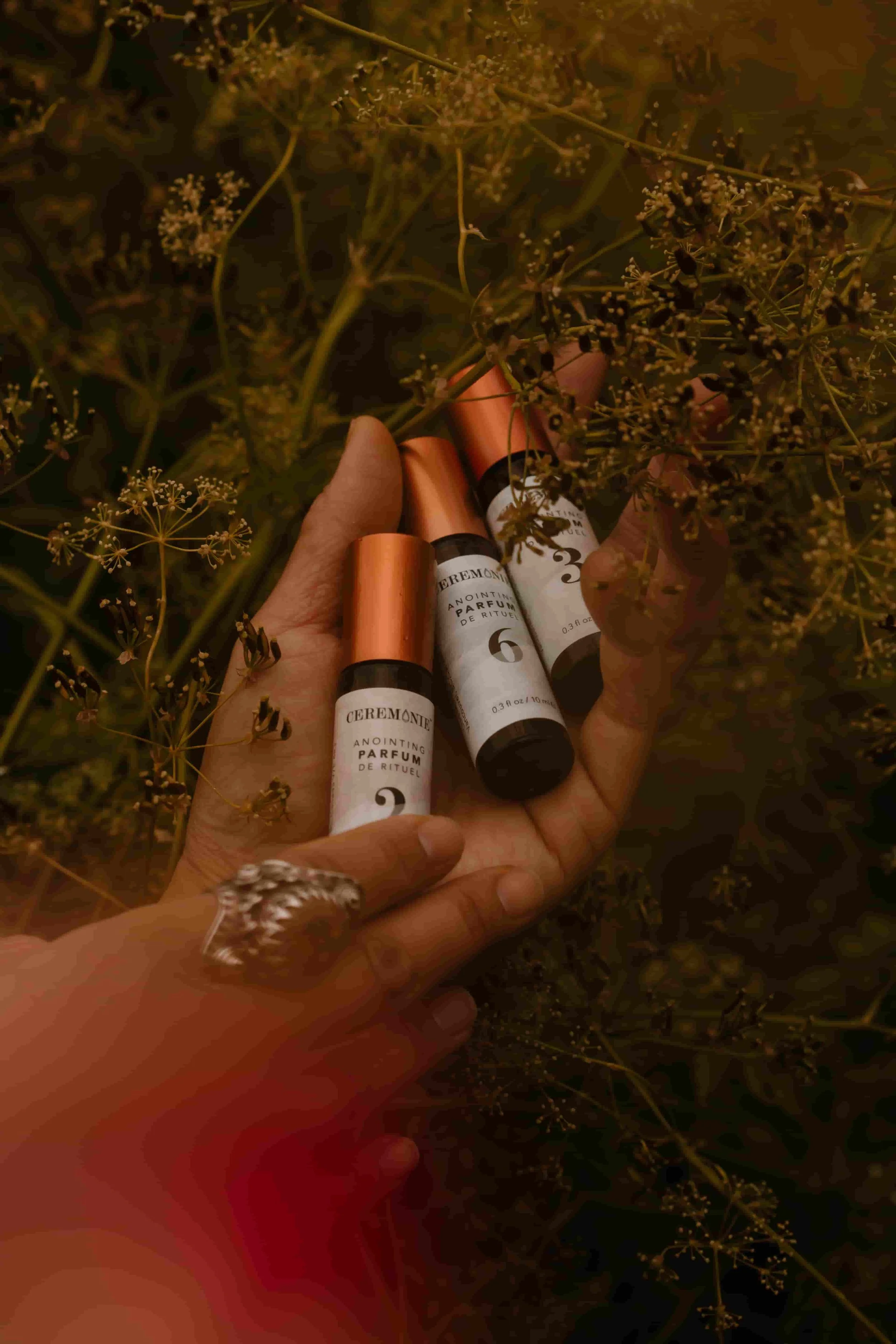
It’s important to know the distinction when buying magic oils—some products labeled “anointing oils” are safe for skin, while “dressing oils” may not be. All of Ceremonie’s Anointing Parfum Oils are skin-safe and can also be used to dress crystals, magical tools, furniture, doors, money, spell papers, and other objects. These plant-based, ritual fragrances are formulated to resonate with spiritual energies, acting as portals for connection, renewal, and channeling. They enhance both physical and spiritual experiences.
How to Use Anointing Oils
When anointing, whether for protection, blessing a space, or manifesting a spell, the application method is crucial to activating the oil's power. Oils can be rubbed in specific patterns—upward on the body to attract, downward to release—depending on your intention. You can also draw shapes or highlight words and phrases in a spell or petition to focus your energy. When used with aligned rituals and intentions, these oils become potent tools for spells, bringing them to life.
10 Ways to Work with Ceremonie’s Anointing Parfums
Ceremonie’s all-plant, ritual-based fragrances are powerful tools for enhancing your spell work and daily life.
Wear as a natural fragrance: Apply to parts of your body that correspond to your desires. For example, anointing your wrists before working can support your efforts, as hands represent work.
Use as a scent-amulet for protection and luck. Ceremonie’s Anointing Parfum No. 1 is ideal for protection spells.
Anoint a space to bless it and invite peace.
Incorporate into spirit communication and divination practices to enhance their potency. Ceremonie’s Anointing Parfum 4 boosts intuition and psychic abilities.
Invite alignment with a partner by using Ceremonie’s Anointing Parfum No. 2 to foster connection and union.
Attract ancestors and spirit guides by adding a drop to candles during your rituals.
Engage in dream work by applying before bed to enhance dream recall and insight. Ceremonie’s Anointing Parfum No. 6 was designed for dream work.
Cleanse and charge an altar or sacred space, imbuing it with your intentions.
Embody different personas or alter egos through the transformative power of scent.
Use to draw desired changes in your life. Ceremonie’s Anointing Parfum No. 5 is suited for money spells.
I understand this is a mention of my own brand, but all Ceremonie Anointing Parfums are handcrafted by me. Like the rest of the Ceremonie line, they are made with authentic, magical herbs that are rooted (pun intended) in tradition. They have been made with principles of occult science, with dried botanicals that have then been strained and topped with the industry’s highest quality of essential oils, absolutes, and botanical extracts.
Purchasing Anointing Parfums from Ceremonie ensures you receive all the essential, hard-to-find herbal and ritually-composed ingredients, along with authentic Aura Mists, ritual incense, and ritual oils via Energized Body Oils. While many witches and magic practitioners craft their own spells and source ingredients from scratch, the convenience and authenticity of Ceremonie's Aura Care (and Skin Care) make them a convenient and reliable choice, even among professional practitioners. I'm all about saving time and effort, offering an effective resource for performing spells with clients or personal use. Explore Anointing Parfums HERE.
How to Make Your Own Botanical Perfumes for Conjuring
In my e-course Create Your Signature Healing Plant Fragrance, we explore the relationship between scents, archetypes, and intuition, along with techniques for creating natural, grain alcohol and oil-based perfumes. This includes scent classification, blending methods, sample recipes, plant energetics, and using your signature scent in ritual practices and spell work.
Following the plants,