
明白: What Clarity Means in the I Ching
What does 明白 mean in Mandarin?
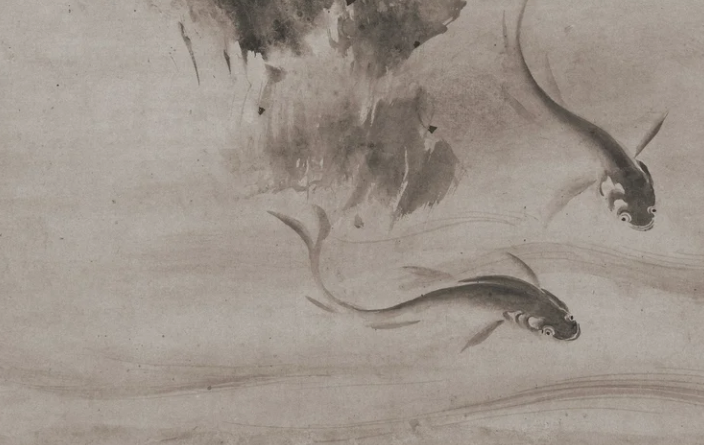
明白 (míngbai) is the word for clarity in spoken Mandarin, and it doesn't mean bright the way a single character may suggest to an anglophone. It means to understand, to see a thing plainly, the moment insight comes to an otherwise occluded mind. 明 (míng) on its own describes light, sun and moon set side by side, the notion of solar and lunar illumination. 明白 takes that light and turns it into comprehension, adds 白 (bái), plain, clear, laid bare, and the two together describe light landing being received. The reception of light denotes relationality, clarity comes through an animated interplay between two or more parties.
This is the word I grew up hearing and speaking.
Common Questions and Answers about the I Ching
How is the I Ching different from Tarot, astrology, or other oracles?
The I Ching is not primarily symbolic or intuitive. It is a structural oracle that maps how change actually unfolds. Rather than centering personal story or archetype, it describes the configuration of a situation and what that configuration tends to produce if it continues. This can be disorienting at first, because it pulls us out of the narrator’s seat and into a logic closer to mathematics and natural law. Like patterns found in weather, crystals, or cells, the I Ching works through binary relationships and line structures that exist independent of an over-emphasis of needing spirituality to make us “feel good”. Instead, it helps us understand.
Is it appropriate to study the I Ching as a non-Chinese person?
You do not need to be of Chinese ancestry to participate in the I Ching series. The I Ching is a classical text and living system that has traveled across cultures because it speaks to universal patterns of change and decision-making. What matters is how it is studied and from whom. As someone of Chinese heritage, I am explicitly inviting you into this work. This series is taught within a culturally grounded, lineage-aware framework that honours the I Ching’s origins rather than abstracting or diluting them. Participation is not about ancestry, but about respect, responsibility, and relational learning. This series welcomes those who engage with care, rigour, and integrity.

What I Ching Divination Taught Me About Parenting Teens
Rachel Cusk wrote something I have returned to many times, about how children teach us to love and in doing so reveal, slowly, the full extent of what we ourselves were never given. I think about this often with Luca, and more so this spring, when the shape of our relationship is visibly changing and I am finding that what is being asked of me now requires something I was not taught either.
I’ve been sitting with the I Ching more than usual this spring, as I tend to do when I’m in a period that doesn’t have language yet. What keeps coming up is Hexagram 53, gradual progress, the image of geese crossing water, each one taking its place in sequence, as biology has directed them to do. The commentary says the student must come to the teacher, not the other way around. If we were to push the West’s hierarchical interpretation of student and teacher, I think about how much of my parenting has been the inverse of the hexagram, showing up unrequested with the thing I thought he needed, certain I knew what it was, and being met with the withering look that teenagers reserve for exactly this kind of blunder.

What the Year of the Horse Means for 2026
When aligned, the Fire Horse is visionary and unstoppable in the most grounded way. It becomes a companion for destined movement, a total contrast to chaotic motion.
An oriented Fire Horse often looks like:
pacing its power and using speed consciously
sensing the field before taking action
letting courage rise from clarity, not adrenaline
choosing aligned companions who strengthen the path
pausing or rerouting without shame
directing fire where it can nourish instead of scorch
staying loyal to what is sincere, instead of what is flashy
translating vision into sequenced, doable action
letting joy guide without relinquishing discernment
being adventurous without self-abandonment
choosing connection over admiration
traveling toward places that can truly hold them, or creating new worlds that will!
This is the potential inside the Fire Horse Chinese Zodiac year.

How January and February Shape the Year of the Fire Horse in Chinese Astrology
Within Chinese Astrology, January & February do different work.
If you’ve been feeling unsettled yet longing for purpose, this is the reason.
The purpose is coming; the timing is just different than the Western calendar implies.
January is the final clearing and last preparation month of the Wood Snake cycle.
February begins the rearranging, reorganizing, and early shaping for the Fire Horse year.
The seasonal and elemental mechanics are different for each month, and so are the invitations.

Part 1: Magic When You’re Exhausted: A Change in Spirit Governance
The assumption that magic relies on clarity and elevated mood is largely a Western inheritance, an artifact of the idea that power should be linear, solar, upward. But in animist and Daoist cosmologies, exhaustion and depression are not “blocks” or something “wrong”. They are transfers of jurisdiction. Your field is being resonating with a different set of custodians, entities or energies who specialize in depth, slowness, dark clarity, and the intelligence of submerged or subconscious-making.
To work magically in these seasons, you must work with the spirits, elements, and hexagrams that govern this terrain. Any other approach is simply the old problem: trying to perform Yang inside a Yin moment.
Low Mood as a Change in Cosmic Jurisdiction
There are phases when your rituals stop responding the way they did during your bright seasons. It’s not because the spirits “left,” and it’s not because your energy is “low vibration.” It’s because your field’s governance has shifted. (Arthur Edward Waite discusses the hierarchy and governance of spirits in The Occult Sciences).
In bright seasons, you’re under solar, upper-world or Yang influence: spirits of fire, breath, clarity, forward movement.
In depleted seasons, you fall under the care of Yin’s jurisdiction…

Before AI, There Was Divination
The I Ching and the Search Engines as Parallel Languages of Knowing
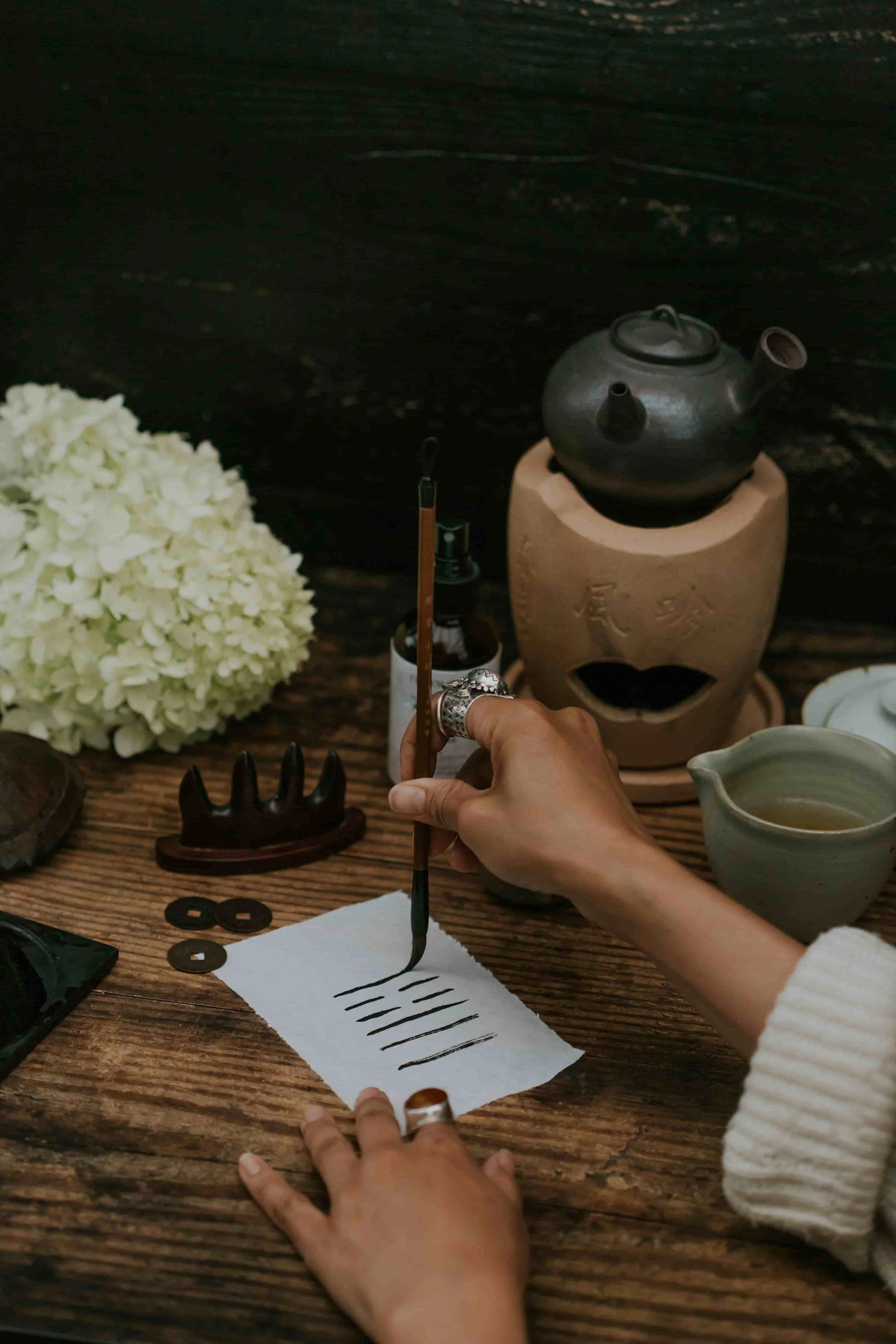
Long before the I Ching (the Book of Changes) was read as a cornerstone of Confucian ethics, it was used as a practical, inspirited / ensouled / necromantic method for decision making. People cast yarrow stalks or coins, recorded six lines, each either solid (Yang) or broken (Yin), and read the resulting hexagram as a snapshot of how conditions were moving. According to archaeological evidence, early hexagram divination served to consult the dead and other spirits. Over time, it became a way to study how the universe’s force also called the Way (Dao) behaves in order to determine one’s proper place within that larger order, and thereby avert catastrophe, make strategic decisions, or garner good fortune. (And if you’re looking to learn i ching online, this is the approach we’ll study: practical, animist, and strategic).